
Drug Addiction Treatment in Portland for Communities Whose Culture Has Been Left Out of Standard Rehab

Updated: Jun 15
When you make the brave decision to seek drug addiction treatment Portland Oregon, you deserve a recovery environment that understands who you are, where you come from, and how your community heals. Unfortunately, the standard American rehabilitation model was largely built around a singular, Westernized perspective of mental health that frequently overlooks the traditions, ancestral histories, and unique systemic struggles of diverse populations.
The problem with it is that for many individuals from marginalized backgrounds, entering a traditional facility can feel like stepping into a space where they have to leave their heritage at the door just to get sober. Finding specialized addiction treatment Portland Oregon providers is about breaking down these institutional walls and creating a space where your cultural identity is integrated into your clinical care.
This article previews how shifting from standard institutional therapy to identity-affirming, culturally responsive care can profoundly transform long-term recovery outcomes for communities historically excluded from mainstream healthcare.
Source: Cielo Treatment Center
The Limitation of the One-Size-Fits-Fits-All Rehab Model
Traditional clinical systems often center drug addiction treatment Portland Oregon entirely around the individual. They focus primarily on isolation, personal pathology, and behavioral modification. While these are important components of evidence-based therapy, this approach can overlook the cultural values and social dynamics that shape healing in many communities.
Some of the key limitations of this model include:
Overemphasis on individual treatment while minimizing the role of family and community support.
Limited recognition of collectivist values common in many non-Western cultures.
Misinterpretation of cultural practices, including spiritual beliefs, coping mechanisms, and expressions of grief, when programs lack cultural humility.
Potential alienation of patients whose lived experiences do not align with traditional Western treatment frameworks.
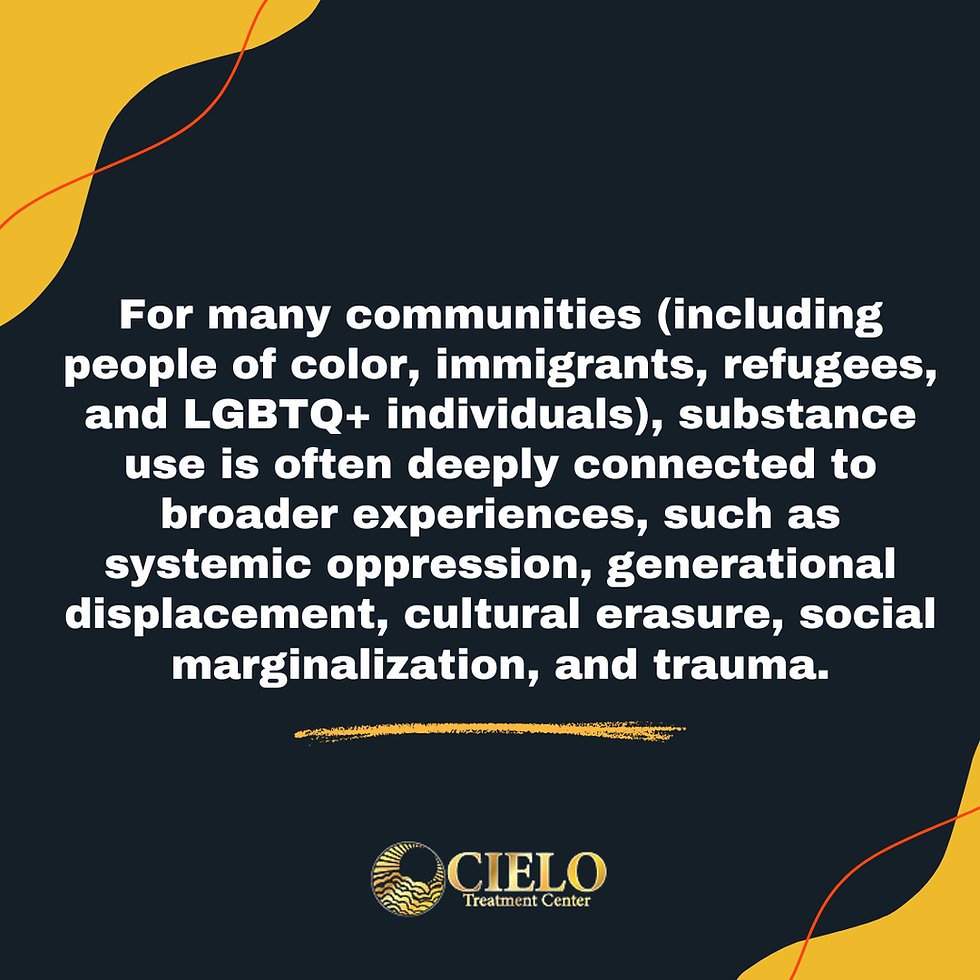
True healing cannot happen in a cultural vacuum. For many communities (including people of color, immigrants, refugees, and LGBTQ+ individuals), substance use is often deeply connected to broader experiences, such as systemic oppression, generational displacement, cultural erasure, social marginalization, and trauma.
When clinical teams are not trained to recognize and address these societal wounds, treatment plans may remain incomplete.

Source: Magnific
Embracing Culturally Informed and Responsive Modalities
To truly serve communities left out of the mainstream narrative, a facility must transition from a passive approach to an active, culturally informed addiction treatment Portland framework. This means that clinicians do not simply tolerate diversity; they build the entire therapeutic curriculum around it.
For instance, rather than relying solely on traditional cognitive behavioral talk therapies, an inclusive program might incorporate storytelling, ancestral reclamation, somatic movement, and communal expressive arts.
A culturally responsive rehab Portland program adapts its scheduling, language options, family involvement, and even dietary offerings to match the cultural realities of its clients. It recognizes that in many communities, healing is a collective responsibility. Therefore, family members and community elders are not viewed as mere visitors, but as foundational partners in the client's treatment and relapse-prevention planning.
Bridging Traditional Wisdom and Modern Clinical Science
The Pacific Northwest carries a deep connection to the heritage of its first peoples, making Indigenous addiction treatment Oregon programs especially important. For many Native American and Indigenous individuals, conventional rehab settings can echo painful histories of forced assimilation and institutional control. Effective care recognizes this history instead of ignoring it.
Culturally affirming treatment bridges traditional healing and clinical support by integrating practices that carry spiritual, emotional, and communal meaning, including:
Sweat lodges – Support spiritual reflection, cleansing, and communal healing
Talking circles – Create spaces for shared storytelling, trust, and emotional expression
Sacred medicines – Honor cultural and spiritual traditions that guide healing and connection
Connection to the land – Reinforces identity, belonging, and grounding through nature and ancestral ties
This integration of traditional wisdom and modern treatment approaches also benefits other diverse populations. Recovery does not happen in isolation, and people often carry experiences shaped by culture, migration, identity, and social systems.

Source: Cielo Treatment Center
The Power of Identity-Affirming Drug Treatment Oregon Environments
When a person enters a drug addiction treatment Portland Oregon program, they are often at their most vulnerable. If they have to constantly explain their cultural background, defend their pronouns, or translate their experiences to a clinical team that doesn't understand, the mental energy required for actual trauma processing is drained. Choosing an identity-affirming drug treatment Oregon center means stepping into an ecosystem where you are immediately seen, validated, and respected.
In these spaces, peer support specialists and clinicians often reflect the very demographics of the communities they serve. Seeing yourself reflected in your leadership creates a profound psychological safety net. It replaces the lingering shame often associated with addiction with a sense of cultural pride and communal resilience. You learn that your heritage is not a barrier to your sobriety, but rather the most powerful asset you possess to maintain it.

Source: Magnific
Rewriting the Recovery Narrative Together
Portland’s unique social landscape demands a treatment infrastructure that actively fights against healthcare disparities.
In drug rehab for diverse communities Portland, culturally responsive care goes beyond just about being inclusive; it is an active form of social and medical justice. By altering how therapy is conducted, communities that have long felt ignored or mistreated by the medical establishment can finally find a trustworthy sanctuary to begin their healing journey.
When looking for drug addiction treatment Portland Oregon options, look for programs that treat your culture as medicine. Recovery is about reclaiming your agency, your health, and your future.
Want to experience a program that sees your whole self? At Cielo Treatment Center, we take pride in having a culturally responsive team that will help you with your specialized recovery journey. Contact us today!


Comments